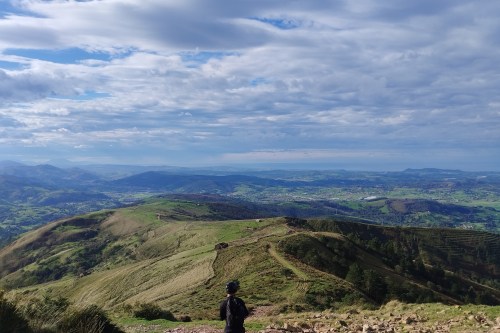
Cycling through rural Cantabria has a special flavor — there are days when you can vividly feel the history of the land. Nestled among the green hills of the Valles Pasiegos, Sarón, born from a simple crossroads and the stubbornness of one man (as I told you in the previous article), is the base for my excursions.
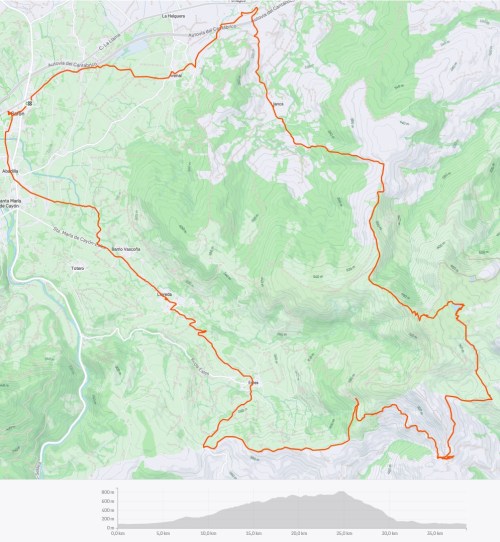
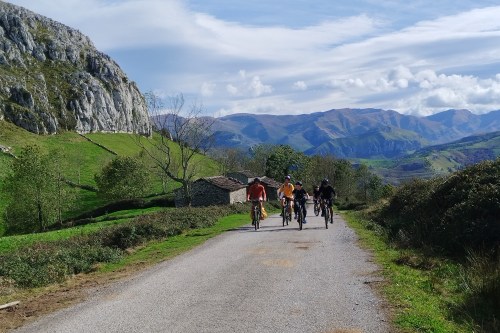
This morning, I set off toward Santa María de Cayón. I took a well-beaten dirt road with the idea of tracing a loop of about 40 km: gentle climbs, more technical sections through the woods between Esles and Lloreda, and a final panoramic descent back to Sarón.
I start heading toward the center of the village. The road leads to a small square, where I stop — once the site of “La venta del señor Saro”. Just a few meters away I grab a coffee at Bar Madrileño. The hour is perfect to see the local bustle: elderly men playing cards, and mujeres on their way home with their shopping.
The sky is a lovely shade of blue, slightly veiled. The air bites — but just a little. Nearby, I see a couple of apples rolling on the ground; a kind old lady is bending over to pick up a few more. I gather the ones that rolled further and hand them to her. She thanks me, and I introduce myself. Her name is Esther — she talks quickly, and I catch just the essentials. I offer to help her carry the fruit home. She kindly accepts, telling me her grandson also studies abroad and how proud she is of him. She would have loved to study too, but she had to go to the market with her mother, who sold cheese and live chickens. I walk with her for a while as she shares more stories about the village, but soon I have to say goodbye — it’s getting late.
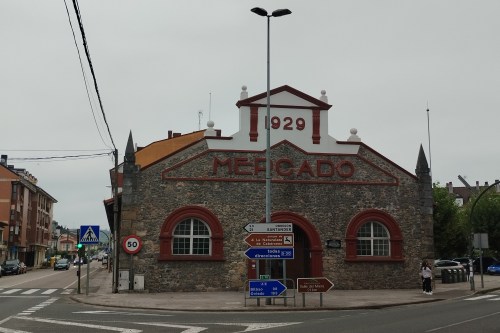
After leaving Esther, I can’t resist visiting the old covered market, now home to exhibitions and cultural events. There was a recent photography show there, with archive materials and oral histories collected from residents. The photos showed barefoot children on dirt roads, women at the washhouse, men working together in the fields. As I looked at them, I thought of Esther, and her childhood tale — La Leyenda de La Cascada del Asón.
A mischievous, enchanting nymph with long, silvery hair. A sister — patient, but only to a point. A curse — and those strands of silver that still dance in the water today… Maybe I’ll tell you the full story in my next piece.
I set off again, this time toward La Tejera, the neighborhood where tilemakers (tejeros) once worked. I climb between old stone walls and houses, leaving the town behind, heading toward Santa María de Cayón.
Here, they still celebrate processions, traditional games, and village festivals. Unfortunately, I missed the baile del pañuelo — an exchange of colorful handkerchiefs as a token of love. It’s still performed here, like a scene from an old Fox movie.
Bueno! Ahora tengo que “andar al monte”.
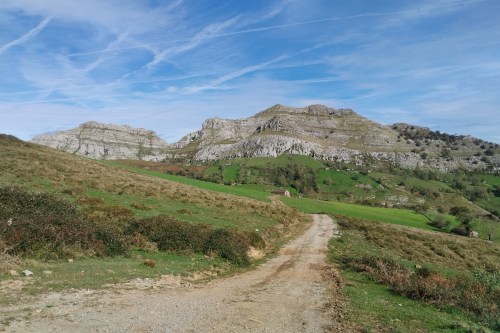
I head toward Lloreda, climbing a small road through meadows and forests. The air smells of damp wood and freshly cut grass. From time to time I pass an isolated house, a barking dog, a cow grazing freely with a bell around its neck. After Lloreda, I ride toward Esles, a quiet hamlet frozen in time. The road narrows, the curves multiply, and the forest gives way to open pastures — until I finally reach Pozo de Noja.
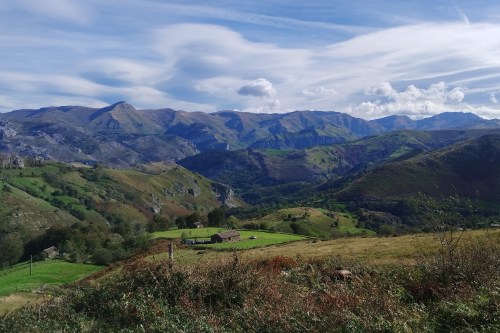
The view here is majestic. Around me, tall and imposing mountains — their ridges sculpted by wind and time. The lake water shimmers in a thousand shades of silver, while two cantabrian eagles glide silently overhead. In that moment, I feel the full force of nature — wild, alive, immense — and I feel myself dissolve into it.
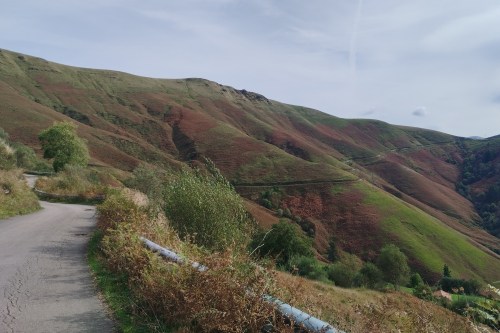
The descent toward Llanos is demanding: steep, uneven, scattered with large stones. But every effort is rewarded — each bend offers a new, wilder, more authentic view.
At Llanos, I return to the meadows, passing through small villages in the gentle rhythm of the plain. Slowly, I begin to recognize the first houses, then the familiar streets of Sarón — the loop closes where it began, in the golden light that always accompanies a return.
| Recommended MTB Route: | Loop Sarón – Lloreda – Esles – Pozo de Noja – Llanos – Sarón |
| Distance: | ~40 km |
| Elevation gain: | +900 m |
| Route type: | mixed (secondary asphalt, dirt, forest) |
| Difficulty: | challenging |
| Highlights: | historic center of Sarón, Lloreda, Esles, and above all, Pozo de Noja |
| Recommended stop: | coffee in downtown Sarón + water refill available in Esles |
If you’re ever around here, Sarón deserves a stop — not just for your legs, but for your mind too.
And if you want the story told to you by bike… you know where to find me.

italian version
Diario di una pedalata dove un incrocio è diventato un paese
Pedalare nella Cantabria rurale ha un sapore speciale, ci sono giornate in cui senti vividamente la storia dei luoghi. Incastonato tra le verdi colline dei Valles Pasiegos, Sarón, nato da un semplice incrocio e dalla testardaggine di un uomo (come vi ho raccontato nell’articolo precedente) è la base delle mie escursioni.
Questa mattina sono partito in direzione di Santa Maria de Cayón. Mi sono inoltrato su uno sterrato battuto con l’idea di disegnare un anello di circa 40 km: salite dolci, tratti più tecnici nei boschi tra Esles e Lloreda, e una discesa finale panoramica proprio verso Sarón.
Parto dirigendomi verso il centro del paese, la strada giunge in una piccola piazza: mi fermo dove un tempo sorgeva “La venta del señor Saro”. Mi sposto pochi metri più in là per un caffè, al bar Madrileño. L’ora è già buona per vedere un certo viavai, anziani del paese giocare a carte e mujeres avviarsi verso casa con la spesa.
Il cielo è di un bell’azzurro, leggermente velato. L’aria pizzica, ma solo un po’. Vicino a me vedo rotolare un paio di mele, mi accorgo che una dolce signora è china a raccoglierne altre. Le raccolgo, un altro paio poco più in là e gliele sporgo. Mi ringrazia ed io mi presento. La signora, una nonnina, si chiama Esther, parla fitto fitto, capisco giusto l’essenziale. Le offro il mio aiuto per portare la frutta verso casa. Con fare gentile accetta e mi racconta che anche suo nipote studia all’estero e ne è tanto fiera. Anche a lei sarebbe piaciuto studiare, ma doveva andare al mercato con la madre che vendeva formaggi e galline vive. La accompagno ancora un po’, mi racconta altre cose interessanti del paese, ma purtroppo la devo salutare: inizia a farsi tardi.
Lasciata Esther, non resisto: cerco il vecchio mercato coperto, che oggi ospita mostre e iniziative culturali. Proprio lì si è tenuta una mostra fotografica con materiali d’archivio e testimonianze orali raccolte tra gli abitanti. Le foto mostravano bambini a piedi nudi tra le vie sterrate, donne al lavatoio e uomini che lavoravano assieme nei campi. Mentre guardavo quelle foto ripensavo a Esther e mi sono ripetuto la sua favola di bambina, La Leyenda de La Cascada del Asón.
Una ninfa dispettosa e incantevole, dai capelli lunghi e argentei. Una sorella, paziente… fino a un certo punto. Una maledizione e… quei capelli d’argento che ancora oggi danzano nell’acqua… Magari con il prossimo articolo ve la racconto per intero.
Riparto e devio verso la La Tejera. Il quartiere dove un tempo lavoravano i tejeros, i fabbricanti di tegole. Salgo tra vecchi muretti e case in pietra e mi lascio alle spalle il paese, direzione Santa María de Cayón.
Qui ancora oggi si celebrano processioni, giochi tradizionali, feste del pueblo. Purtroppo ho perso il baile del pañuelo: uno scambio di fazzoletti colorati come segno d’amore. Qui lo si celebra ancora, come in una scena di un vecchio film della Fox.
Bueno! Ahora tengo que “andar al monte”. Riparto verso Lloreda, mi arrampico su una piccola strada tra prati e boschi. L’aria qui profuma di legna umida e di erba appena tagliata. Ogni tanto incrocio qualche casa isolata, un cane che abbaia, una mucca che pascola libera con la campana al collo. Dopo Lloreda mi dirigo verso Esles, contrada silenziosa e ferma nel tempo. Continuo a salire: la strada si fa più stretta, le curve si moltiplicano e il bosco lascia spazio a pascoli aperti, fino a giungere il Pozo de Noja.
Qui la vista è maestosa. Attorno a me montagne alte ed imponenti, le creste scolpite dal vento e dal tempo. L’acqua del lago si cela in mille sfumature d’argento, mentre nel cielo volteggiano silenziose e lente due aquile cantabriche. In quell’istante sento tutta la forza della natura — selvaggia, viva, immensa — e mi sembra di annullarmi in essa.
La discesa che porta fino a Llanos è impegnativa: il sentiero è ripido e sconnesso, disseminato di grossi sassi. Ma la vista ripaga ogni sforzo: ogni curva regala una prospettiva nuova, più selvaggia e autentica.
A Llanos torniamo sui prati e incontriamo piccoli villaggi nel ritmo dolce della pianura. Pian piano riconosco le prime case, poi le vie familiari di Sarón: il giro si chiude dove era cominciato, in una luce dorata che accompagna ogni ritorno.
| Percorso MTB consigliato: | Anello Sarón – Lloreda – Esles – Pozo de Noja – Llanos – Sarón |
| Distanza: | ~40 km |
| Dislivello: | +900 m |
| Tipo di percorso: | misto (asfalto secondario, sterrato, bosco) |
| Livello: | difficile |
| HIghlights: | centro storico di Sarón, lloreda, Esles ma soprattutto il Pozo de Noja |
| Punto di ristoro consigliato: | caffè in centro a Sarón + possibilità di rifornimento acqua a Esles |
Se passi da queste parti, Sarón merita una sosta. Non solo per le gambe, ma anche per la mente.
E se vuoi fartelo raccontare in bici… sai dove trovarmi.
 Akira06 Bike AdvenTour
Lascia un commento